BOOKS IN GREEK
Products

Categories
Articles

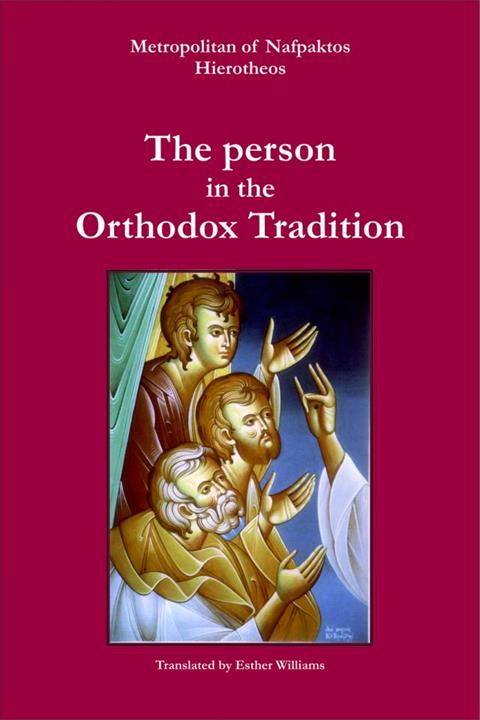
The person in the Orthodox Church
The book The person in the Orthodox Church examines the basic teachings of the Fathers of the Church on the subject of the person.
In attempting to define the person, the holy Fathers rejected the method and views of the philosophers. They asserted that the revelation and experience of the person takes place within the heart, when a human being is regenerated by divine grace. The person cannot be understood without Christian asceticism in association with the sacraments of the Church.
As a practical example of a person in the fullest sense, the book includes a section which looks in detail at the life of St Symeon, a Fool for Christ of the sixth century, who was so discerning that he knew how to shock people in order to bring them to their senses and acknowledge their sins.
Read now:
Preface to the Second English Edition 2021
Translator’s Note
Preface to the First English Edition 1999
Introduction
1. The holy Fathers and philosophy
1. Philosophy and theology
2. The two educations and the two wisdoms
3. The Three Hierarchs and philosophy
4. The term ‘philosophy’ used by the Fathers
5. Conclusion
2. The human person according to the holy Fathers
1. The theology of the person
2. Person and man
3. Contemporary interpretations-analyses of the person
4. The asceticism of the person
5. The value of considering the asceticism of the person
a) Person and eros
b) Person and freedom
c) Person and social problems
6. Conclusion
3. The hypostasis-person in philosophy and theology
1. The person according to philosophy
2. The person in Western and Orthodox theology
3. The theology of the mode of being
4. The asceticism of the person
5. The Orthodox conception of the person
4. The experience and terminology of the person
1. Contemporary views of interpersonal relations
2. The Patristic experience and terminology of the person
3. God is experience
4. The vision of God and the theology of the Holy Trinity
5. The formation of the terms essence, hypostasis, person
6. The weakness of theological terms
7. Correlation of triadology with anthropology and sociology
8. Conclusion
5. The saints, bearers of Divine Revelation
1. The bearers of divine Revelation
2. The value of divine Revelation
a) The cosmological problem
b) Being and becoming
3. Theology and the pastoral care of the holy relics
6. The morality of freedom and the freedom of morality
1. The theology of freedom
a) The relativity of human freedom
b) The challenge of freedom
c) Freedom and fall
d) Natural will and will based on opinion
e) The freedom of the saints
2. Freedom from death
a) Independence and death, according to St. John of Damaskos
b) The entrance of death according to St. Gregory Palamas
c) Sin and death
d) Transcending death
3. The freedom of the nous
a) Freedom and nous
b) Freedom of the nous, according to Abba Isaiah the solitary
4. Foolishness for Christ as a life of freedom
a) What are the fools for Christ
b) The reason for their emergence
c) The preconditions of foolishness in Christ
d) The falling asleep of the fools for Christ
e) Christian life and foolishness
5. Conclusion
Index of names
To see the correct prices and shipping costs for your country, you must first create an account or sign in.

After signing in, the system automatically detects your shipping country and displays the correct prices, VAT and shipping costs.

For customers outside the EU, VAT is automatically removed after you sign in.

Wholesale customers see special wholesale prices automatically after signing in.
Free shipping:
via ACS Courier.
We ship worldwide using:
 DHL
DHL ACS Courier
For orders over 50kg, shipping is arranged via a freight transport company after communication with our team.

Electronic transactions are ensured by the secure environment of Eurobank and the National Bank of Greece