BOOKS IN GREEK
Products

Categories
Articles

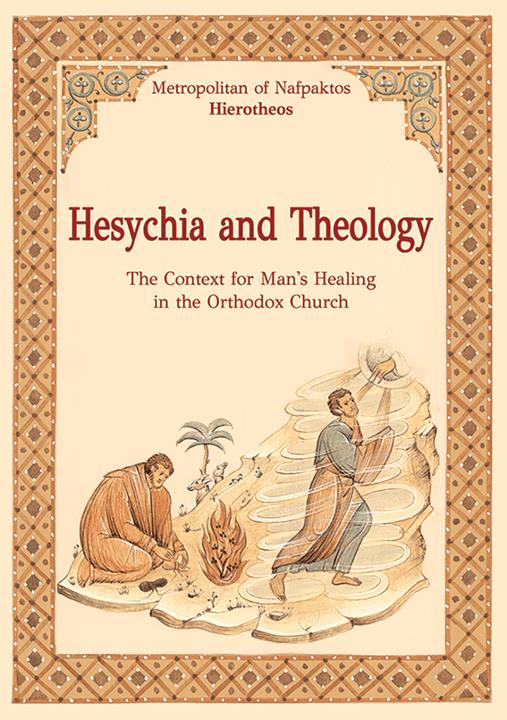
Hesychia and Theology
The context of Man's healing in the Orthodox Church
Hesychia and Theology explores all aspects of hesychia, which is inner stillness, peace of the heart, and shows the range and depth of life in the Orthodox Church.
It becomes clear that hesychia is a complete science and method relating to thoughts, the heart and the senses, and helps us to be delivered from passions and to overcome death. Hesychia is the path along which the Christian must inevitably pass to reach communion with God.
Subjects covered by this remarkable book include sanctity, God’s covenant – including His covenant with each person, the spiritual law, and hesychastic elements in the Divine Eucharist. Highlights include two chapters on Archimandrite Sophrony of Essex – one centring on his Prayer at Daybreak,the other on his book Words of Life– and a fascinating chapter on Saint Mary of Egypt.
Preface to the English Edition
Preface to the Greek Edition
Instead of an Introduction
1. Sanctity in the Orthodox Tradition
1. Saints by Participation in God
2. Sanctification of Soul and Body
3. Tokens of Sainthood
4. Honouring the Saints
5. Categories of Saints
6. The Gift of Discernment
2. The Covenant of God
1. The Meaning of ‘Covenant’
2. The Old Covenant
a) Moses the God-Seer
b) Moses’ Ascents and Descents of Mount Sinai
c) Key Points of this Revelation
3. The New Covenant
a) Christ and the New Covenant
b) Commandments – Blood – Supper
4. Personal Covenant
a) The Advent of Divine Grace
b) Spiritual Co-operation
c) The Divine Eucharist
5. Conclusion
3. The Spiritual Law
1. Different Levels of the Law
2. The Spiritual Law according to St Mark the Ascetic
a) What is the Spiritual Law?
b) The Spiritual Law in Man’s Striving for Purity
c) The Spiritual Law on the Activity of the Passions and their Healing
d) The Spiritual Law in Temptations, Afflictions and Trials
e) The Spiritual Law in Relation to Spiritual Gifts
3. Conclusions
4. The Neptic Theology of the Orthodox Church as a Therapeutic Method
1. Orthodox Watchfulness (Nepsis) and Hesychia
2. The Context of Orthodox Theology
3. Significant Texts from the Holy Fathers of the Church
4. A Contemporary Man Completely Cured
5. Orthodox Theology in Relation to Frankl’s Existential Psychology and Contemporary Neurology and Psychiatry
5. The Sacrament of Repentance as the Church’s Therapeutic Praxis
1. Man’s State before the Fall
2. The Aim and Work of Repentance
3. The Church’s Method of Healing
4. Some Examples
6. The Person of the Spiritual Father and the Gift of Discernment
1. The Person of the Spiritual Father
2. The Priest as Father and Mother
3. Man’s Healing
4. The Pastoral Theology of the Sacred Canons of the Church
a) Ecclesiological Interpretation of the Sacred Canons
b) The Spiritual Father’s Gift of Discernment
c) Applying the Canons Strictly or with Economy
d) The Person who Implements the Canons
5. Conclusion
7. Holy Scripture and Worship
1. The Unincarnate and Incarnate Word
2. Created and Uncreated Worship
3.Types, Signs and Symbols
4. Communion of Persons or Communion of Nature(s)?
5. The Church Militant and the Church Triumphant
6. The Spoken Word and Sighs too Deep for Words
8. The Readings for the Feasts of the Lord and the Mother of God
1. Holy Scripture and Worship
a) Holy Scripture and the Experience of Revelation
b) Prophets and Apostles
c) The Unincarnate and the Incarnate Word
d) Unutterable Words and Created Words and Concepts
e) The Created and Uncreated Law
f) The Created and Uncreated Temple
2. Readings for the Feasts of the Lord and the Mother of God
a) Readings for Feasts of the Lord
b) Readings for Feasts of the Mother of God
3. Conclusion
9. From the Morning Watch until the Night
1. The Meaning of the Verse from the Psalms
2. Elder Sophrony
3. Elder Sophrony’s ‘Prayer at Daybreak’
a) Personal Relationship with God
b) Profound Self-Accusation
c) Seeking a Blessing on the Whole Day
d) Healing of the Will
e) Eschatological Prayer
4. Living Examples
5. The Text of the Prayer at Daybreak
10. Spiritual Inspiration
1. What is Spiritual Inspiration?
2. The Characteristics of Spiritual Inspiration
3. The Struggle to Experience and Preserve Spiritual Inspiration
a) Continuous Awareness that God is Everywhere Present
b) Striving to Express Love towards Others
c) Unwavering Search for Spiritual Ascent
d) Overcoming Death
e) Dealing with Thoughts
f) Keeping Christ’s Commandments
4. Conclusion
11. The Path to Deification
1. The Life of St Mary of Egypt
2. Theological Lessons from the Life of St Mary of Egypt
a) The Gift of Baptism
b) The Grace of Repentance
c) The Experience of the Mystery of the Cross
d) Sharing in God’s Deifying Energy
e) The Suspension of Bodily Energies
f) The Action of Holy Communion
g) The Gift of a Blessed End
h) The Blessed Figures of Abba Zosimas and St Sophronius
i) Overcoming the Division between the Sexes
j) The Co-existence of Sacramental and Spiritual Priesthood
12. Nous and Perception according to St Diadochos of Photiki
1. One Hundred Texts on Spiritual Knowledge
a) Introduction
b) Contents of the Book
c) The Preface: The Ten Definitions
2. The Nous and its Purification
a) Relationship and Antagonism between Soul and Body
b) Energy and Purification of the Nous
3. Perceptive Faculties of the Nous and Heart
a) The Senses of the Soul and the Body
b) Demonic Energy – the Bodily Senses
Energy of Grace – the Soul’s Perceptions
c) Perceptive Faculties of the Nous, Heart and Soul
d) Conscious Perception and Assurance
e) Perception and Spiritual Knowledge
f) Perceiving God as Light
13. Ecumenism in Praxis: in Theology and Asceticism
1. The Basic Theories of Ecumenism
2. Ecumenism in Theology
a) Some Typical Examples
b) The Views of Professor John Karmiris
c) The Error of these Views
3. Ecumenism in Asceticism
a) Orthodox Asceticism
b) Neoplatonism and Orthodox Neptic Theology
c) The Teaching of St Maximos the Confessor on Practical, Natural and Theological Philosophy
d) The Teaching of St Nikitas Stithatos on the Degrees of Purification, Illumination and Perfection
4. Conclusion
14. Orthodox and Secularised Theology
1. The Perfect Life
2. Truth and Falsehood
3. Moses the Great Theologian
a) Worldly Education and Philosophy
b) The Mystery of the Theophany in the Burning Bush
c) Prayer in Theoria and the Priesthood
d) The Entry of Moses into the Darkness
e) The Death of Moses
4. The Journey of the People of Israel
5. The Situation Today
6. Conclusion
15. Monasticism according to St Eustathios of Thessaloniki
1. The Noble Purpose of Monasticism
2. The Three Classes of Monks
3. The Life of Monks as Revealed in the Service of Tonsure
4. Fallen Monks
5. Abbots without Bishops
16. Hesychia and Theology
1. The Content of the Book on Elder Paisios
2. Empirical Ecclesiology
3. Seer, Saint, Martyr
4. The Authenticity of the Book
5. Memory of the Heart
17. Hesychastic Elements in the Divine Eucharist
1. The Divine Eucharist as a Journey
2. Specific Hesychastic and Neptic Elements
a) The Presence of Angels
b) The Divine Eucharist and Noetic Liturgy
c) Enlightenment and Understanding the Gospel Readings
d) Distinction between Catechumens, Those Preparing for Illumination and the Faithful
e) The Prayer of the Cherubic Hymn
f) Commending our Whole Life to God
g) Supplications for a Peaceful and Holy Life
h) Priesthood as Martyrdom
i) Communion of the Holy Gifts
3. Conclusion
To see the correct prices and shipping costs for your country, you must first create an account or sign in.

After signing in, the system automatically detects your shipping country and displays the correct prices, VAT and shipping costs.

For customers outside the EU, VAT is automatically removed after you sign in.

Wholesale customers see special wholesale prices automatically after signing in.
Free shipping:
via ACS Courier.
We ship worldwide using:
 DHL
DHL ACS Courier
For orders over 50kg, shipping is arranged via a freight transport company after communication with our team.

Electronic transactions are ensured by the secure environment of Eurobank and the National Bank of Greece