ΒΙΒΛΙΑ ΣΤΑ ΕΛΛΗΝΙΚΑ
Προϊόντα

Κατηγορίες
Άρθρα

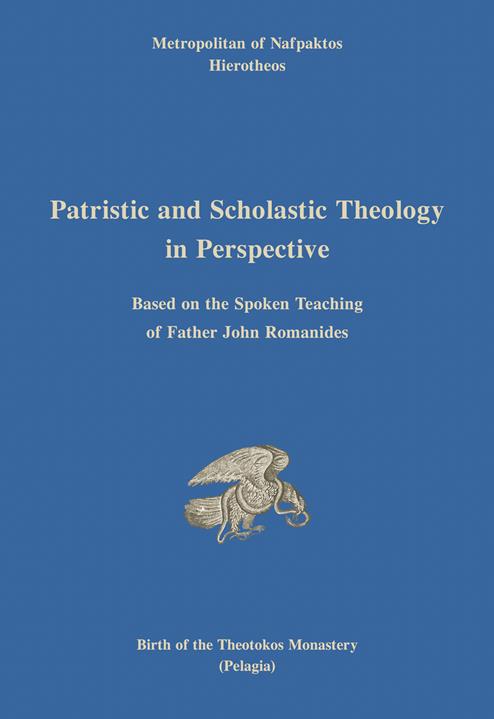
Patristic and Scholastic Theology in Perspective
Metropolitan Hierotheos throws light on the distinctions between patristic and scholastic theology, using as his basis the spoken teaching of Father John Romanides.
In the West a particular theology developed using human reason, whereas patristic theology centres on the revelation of God to the human heart through the illumined nous. This book focuses on the difference between these two approaches to theology, as well as exploring the wider context of Greek philosophy, Russian theology and neo-Hellenic theology.
Because the historical foundations of patristic theology lie in the united Christian Empire of the Romans, whereas scholastic theology finds expression in Western Europe as shaped by the Franks, a final section on ‘Franks and Romans’ presents controversial views of historical events, including the French and Greek Revolutions, from an Orthodox theological perspective.
It is fashionable today to teach that patristic theology came to an end in the eighth century, that scholastic theology transcended patristic theology, and that Russian theology surpassed both. However, such views undermine the foundations of Orthodox theology and ultimately of the Orthodox Church.
Read now
Preface
Introduction
1. Fr John Romanides and Western Theology
1. Influences on the Teaching of Fr John Romanides
2. Fr John Romanides and Empirical Hesychasm
3. From Scholastic and Protestant Theology to Patristic Theology
4. Fr John Romanides’ Criticism of Biblical Criticism
5. Final Conclusions
2. Metaphysical Philosophy
1. Definition and Principles of Philosophy
2. Classical Metaphysics
a) Plato
b) Aristotle
c) The Neoplatonists
3. The Philosophical Theology of the Ancient Heretics
3. Patristic Theology
1. ‘Interpretative Keys’
a) Trinitarian Theology
b) Christology
c) Ecclesiology
d) Eschatology
2. The Fathers and Philosophy
a) The Fathers Knew Philosophy
b) The Fathers Were not Philosophers
c) Byzantium and Philosophy
d) A Mistaken View of the Patristic Tradition
e) The Fathers against Philosophy and Metaphysics
3. The Fathers and Neoplatonism
a) Neoplatonism
b) The Difference between the Fathers and the Neoplatonists
4. Experience of the Holy Spirit as the Basis of Patristic Theology
a) Empirical Terminology
b) Empirical Methodology
c) Empirical Epistemology
d) Deluded Experience
4. Scholastic Theology
1. The Term Scholastic Theology
2. Scholastic Theologians
3. The Foundations of Scholastic Theology
a) Augustine Bishop of Hippo
i.General Comments on Augustine’s Teaching
ii.Basic Points of Augustine’s Teaching
b) The Misinterpretation of the Writings of St Dionysius
the Areopagite in the West
c) Platonic and Aristotelian Philosophy among
the Scholastics
d) ‘Universals’ and ‘Particulars’
e) Analogia Entis and Analogia Fidei
f) Thomas Aquinas
4. Reactions to Scholasticism and its Influence
a) Orthodox Reactions
i. The Dialogue between St Gregory Palamas and Barlaam
ii.Encounter between the Scholastic Thomas Aquinas
and Kallistos Angelikoudis
b) Western Reactions to Scholasticism and its Influences
i. Nominalism
ii. Renaissance
iii. Reformation
iv.Enlightenment
v. German Idealism
vi.Existentialism
5. Russian Theology
1. Orthodox and Western Influences on the Russian Church
and Theology
2. Orthodox and Western Influences on Monasticism
3. Slavophile Theology and the Views of Alexis Khomiakov
4. Contemporary Russian Theology
a) The Theological Institute of St Sergius in Paris
b) The Theory that the Patristic Tradition has been
Surpassed
c) The Human Person, according to Lossky
d) Eucharistic Ecclesiology, according to Afanasiev
6. Neo-Hellenic Theology
1. Orthodox Hesychasm and Western Influences in the
Orthodox East in the Fourteenth Century
2. Theology under Turkish Domination
a) Orthodox Hesychasm and Western Influences
among the Oppressed Greeks [Romioi]
b) Theological Resistance
i. Preserving the Orthodox Tradition
ii. Preserving Monasticism and the Hesychastic Life
iii. The Contribution of the New Martyrs
3. The Influences of Western Tradition on the Founding of
the Greek State
a) Latin and Protestant Propaganda
b) Adamantios Korais, ‘Father of Neo-Hellenism’
i. Self-Proclaimed Autocephaly of the Church of Greece
ii. The Theological Schools
iii. Religious Life
7. Romans and Franks
1. The Roman Empire
2. ‘The Holy Roman Empire of the German Nation’
a) Barbarian Invasions and Conquests
b) The Feudal System
c) Roman Resistance and Uprisings
d) Plan for Full Independence of the Western Part of
the Roman Empire
e) Falsification of History and Propaganda
3. The French and Greek Revolutions
4. The Founding of the Greek State
5. Modern Europe
Final Words
Για να δείτε τις σωστές τιμές και τα σωστά μεταφορικά για τη χώρα σας, πρέπει πρώτα να κάνετε εγγραφή ή σύνδεση στον λογαριασμό σας.

Αφού συνδεθείτε, το σύστημα αναγνωρίζει αυτόματα τη χώρα αποστολής σας και εμφανίζει τις σωστές τιμές, τον Φ.Π.Α. και τα μεταφορικά.

όπως ΗΠΑ, Καναδάς και Αυστραλία, ο Φ.Π.Α. αφαιρείται αυτόματα μετά τη σύνδεση.

Για πελάτες χονδρικής, οι ειδικές τιμές χονδρικής εμφανίζονται αυτόματα στις τιμές των προϊόντων μετά τη σύνδεση στον λογαριασμό χονδρικής.
τα έξοδα αποστολής είναι δωρεάν:
με αποστολή μέσω ACS Courier.
Για αποστολές στο εξωτερικό χρησιμοποιούνται οι:
 DHL
DHL ACS Courier
Για παραγγελίες άνω των 50kg, η αποστολή πραγματοποιείται μέσω μεταφορικής εταιρείας κατόπιν συνεννόησης.

Οι ηλεκτρονικές συναλλαγές διασφαλίζονται από το ασφαλές περιβάλλον της Eurobank και της Εθνικής Τράπεζας της Ελλάδος